
Annonces

Single sign-on security risks have become a central concern as millions of users rely on “Sign in With” buttons to access countless digital services through one primary identity provider. This article examines how convenience-driven authentication models expand exposure, centralize failure points, and reshape accountability across interconnected platforms.
Modern authentication ecosystems prioritize frictionless onboarding, reducing password fatigue and accelerating user acquisition metrics for developers. However, this architectural simplification often conceals systemic dependencies that concentrate sensitive credentials within a limited number of dominant identity brokers.
When a user authorizes multiple applications through a single provider, they implicitly create a federated trust chain across unrelated services. That chain amplifies consequences if the core account becomes compromised, suspended, or misconfigured.
This analysis explores the operational mechanics behind federated login systems and evaluates their structural weaknesses. It also assesses governance, data minimization practices, token management, and long-term exposure risks.
Real-world breach patterns reveal that attackers frequently target authentication layers rather than individual downstream apps. By compromising the identity provider or hijacking authorization tokens, adversaries gain cascading access across ecosystems.
Annonces
The discussion that follows dissects technical, behavioral, and regulatory dimensions of federated login frameworks. It provides an evidence-based perspective grounded in cybersecurity practice, platform economics, and user risk management.
How Federated Login Systems Actually Work
Federated login systems rely on identity providers that authenticate users and issue cryptographically signed tokens to third-party applications. These tokens assert verified identity attributes without requiring the third party to store passwords directly.
Protocols such as OAuth 2.0 and OpenID Connect define the authorization and identity exchange process between service providers and applications. They separate authentication from authorization, theoretically reducing password proliferation across platforms.
When a user clicks “Sign in With,” the application redirects them to the identity provider’s authorization endpoint. After successful authentication, the provider returns an access token and sometimes a refresh token.
Access tokens grant limited, scoped permissions to the requesting application for defined periods. Refresh tokens extend that access, often invisibly renewing sessions without further user interaction.
Developers implement these flows to streamline onboarding and reduce credential storage liability. Fewer stored passwords mean smaller internal attack surfaces for smaller applications.
However, this architecture shifts risk from distributed credentials to centralized identity repositories. The security of every connected app becomes partially dependent on the resilience of the upstream provider.
Token leakage represents a specific technical vulnerability within federated systems. Improper storage of tokens on devices or insecure transmission channels exposes authorization credentials to interception.
Misconfigured scopes also create unintended privilege escalation scenarios across services. An application that requests excessive permissions can access more user data than necessary.
Therefore, while federated login reduces password reuse, it consolidates identity control. That consolidation fundamentally changes how breaches propagate through digital ecosystems.
++How Hackers Exploit Old Apps That You Forgot to Update
Centralization and the Single Point of Failure Problem
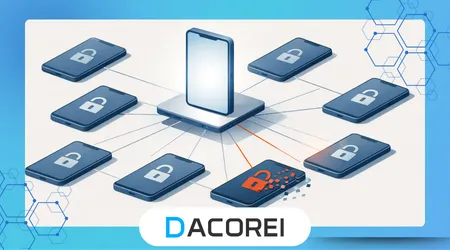
Federated authentication introduces structural centralization, creating a single point of failure within a user’s digital identity stack. If attackers compromise the primary account, they inherit indirect access to every connected application.
The cybersecurity community has repeatedly warned about dependency concentration within identity infrastructure, including guidance from the Institut national des normes et de la technologie. Centralized identity architectures demand exceptionally strong multi-factor authentication and monitoring controls.
An attacker who bypasses protections on one primary account can pivot laterally into financial services, productivity tools, and communication platforms. This lateral movement transforms a single credential breach into a multi-platform compromise.
Account suspension also creates operational fragility within centralized login ecosystems. If an identity provider flags a user incorrectly, access to numerous unrelated services can disappear simultaneously.
Service outages further highlight systemic dependency risk. When identity providers experience downtime, thousands of dependent applications may lose authentication capability at once.
Organizations that rely heavily on social login for workforce tools introduce business continuity exposure. Employees may lose access to essential systems if the upstream provider suffers disruption.
Centralization complicates incident response as well. Revoking tokens and auditing access across dozens of applications requires coordinated oversight many individuals lack.
Data aggregation amplifies exposure in breach scenarios. A single compromised account may reveal behavioral, financial, and communication patterns across unrelated domains.
| Risk Vector | Description | Impact Scope |
|---|---|---|
| Credential Compromise | Primary account breached | All connected apps |
| Token Leakage | Access tokens exposed | Scoped but repeatable access |
| Account Suspension | Provider disables account | Service-wide lockout |
| Provider Outage | Authentication unavailable | Ecosystem disruption |
This table illustrates how risk vectors scale proportionally with centralization. The more applications attached to one provider, the greater the systemic exposure footprint.
Data Sharing and Scope Creep Across Applications
Federated login rarely limits itself to identity verification alone. Many applications request profile information, email addresses, friend lists, or other metadata during authorization.
Users frequently approve these scopes without reviewing requested permissions in detail. Convenience biases reduce scrutiny, increasing unnecessary data exposure across platforms.
Le Commission fédérale du commerce has repeatedly emphasized data minimization and informed consent in digital ecosystems. Overbroad permission grants undermine those principles and increase misuse potential.
Applications often retain received data even after users disconnect accounts. Without strict deletion protocols, residual data remains stored in backend systems indefinitely.
Scope creep can evolve over time as applications update permission requirements. A once-minimal integration may expand to request analytics, marketing, or behavioral data.
Identity providers also collect telemetry about app usage patterns. This aggregated behavioral data may influence advertising models or recommendation systems.
Cross-application tracking becomes easier when one identity anchors multiple services. Behavioral profiling gains accuracy as authentication tokens correlate diverse activities.
Developers may rely on third-party SDKs that extend beyond initial authorization purposes. These embedded components can introduce additional tracking layers.
Users rarely audit which applications maintain active authorization tokens. Dormant integrations may persist for years without review.
Therefore, federated login transforms identity into a persistent data bridge. That bridge expands privacy exposure beyond simple password management concerns.
Token Management and Technical Vulnerabilities
Access tokens operate as bearer credentials that grant privileges without additional verification. If attackers intercept a valid token, they can access authorized resources without knowing the original password.
Improper storage of tokens in local storage or insecure mobile environments increases compromise probability. Attackers exploit cross-site scripting vulnerabilities to extract stored tokens.
The European Union Agency for Cybersecurity highlights token lifecycle management as a critical security control in identity systems. Short expiration periods and secure rotation reduce exposure windows.
Refresh tokens introduce additional complexity because they enable silent reauthentication. If compromised, they can perpetuate unauthorized access long after initial login.
Public Wi-Fi environments increase interception risk when applications misconfigure HTTPS or certificate validation. Man-in-the-middle attacks remain relevant in poorly implemented integrations.
Token revocation mechanisms often lack transparency for end users. Many users cannot easily see or invalidate active sessions across multiple devices.
Developers sometimes overtrust tokens without validating issuer signatures correctly. Inadequate verification logic can allow forged tokens to bypass authentication.
API misconfigurations also expose authorization endpoints to abuse. Rate-limiting failures may enable brute-force token guessing or replay attempts.
Security posture therefore depends on disciplined implementation standards. Weak engineering practices convert federated login convenience into expanded attack surface.
++Why QR Codes Are Being Used in Scams and How to Scan Them Safely
Behavioral Risks and User Complacency
User psychology plays a decisive role in single sign-on security risks. Convenience reduces friction, but it also lowers vigilance regarding account protection.
Individuals often neglect enabling multi-factor authentication on primary accounts. This omission dramatically increases breach probability across all linked services.
Phishing campaigns frequently target identity providers rather than individual apps. Attackers understand that compromising one account yields disproportionate access.
Credential stuffing attacks also exploit reused passwords on primary accounts. Even with federated login, poor password hygiene undermines security assumptions.
Users rarely review connected application dashboards within identity provider settings. Dormant authorizations remain active long after apps fall out of use.
Social engineering attacks exploit trust in recognizable “Sign in With” interfaces. Malicious lookalike pages can capture credentials convincingly.
Account recovery workflows introduce additional weaknesses. If attackers manipulate recovery emails or phone numbers, they can reset centralized credentials.
Overconfidence in brand reputation fosters misplaced trust. Users assume large providers guarantee absolute protection, overlooking shared responsibility principles.
Ultimately, human behavior interacts with technical architecture to determine actual risk. Without disciplined security habits, centralized authentication magnifies consequences.
Regulatory, Governance, and Accountability Challenges
Federated login distributes responsibility across identity providers and application developers. Determining liability after a breach can become legally complex.
Data protection regulations impose obligations on both controllers and processors within identity ecosystems. Shared authentication complicates clarity about who controls what data.
Cross-border data flows further complicate compliance with jurisdiction-specific privacy laws. Identity providers often operate globally, spanning multiple regulatory regimes.
Breach notification timelines may differ between providers and dependent applications. Coordinated disclosure becomes operationally challenging in multi-party ecosystems.
Auditing federated systems requires visibility into token issuance, scope assignments, and revocation logs. Smaller developers often lack mature logging infrastructure.
Identity providers may update API standards unilaterally, affecting downstream integrations. Application teams must monitor changes continuously to maintain compliance.
Third-party risk management frameworks increasingly assess authentication dependencies during vendor evaluations. Overreliance on one provider may trigger governance concerns.
Corporate environments must evaluate federated login within enterprise identity strategies. Consumer-grade social login rarely meets strict organizational compliance standards.
Therefore, governance complexity scales alongside technical integration. Effective oversight demands proactive monitoring, documentation, and periodic risk reassessment.
Conclusion
Federated login delivers undeniable efficiency benefits for users and developers seeking rapid onboarding and reduced credential sprawl. However, efficiency must never overshadow systemic risk concentration.
Single sign-on security risks intensify as individuals attach dozens of applications to one identity anchor. The resulting dependency network amplifies impact from even minor account weaknesses.
Centralization transforms isolated breaches into ecosystem-wide compromises. Attackers strategically exploit this leverage to maximize return on intrusion efforts.
Token mismanagement, scope creep, and inadequate revocation controls further expand exposure. Technical misconfigurations convert theoretical safeguards into exploitable gaps.
Behavioral complacency compounds architectural fragility. Users who neglect multi-factor authentication effectively undermine the protective assumptions of federated systems.
Privacy considerations also extend beyond password reuse mitigation. Data aggregation across services creates profiling and retention risks that persist long-term.
Governance structures must evolve to address distributed accountability. Clear contractual terms and auditing processes reduce ambiguity when incidents occur.
Developers should apply strict least-privilege principles to requested scopes. Minimal permissions materially reduce downstream impact from token compromise.
Users should regularly audit connected applications and revoke dormant authorizations. Proactive hygiene narrows the blast radius of potential breaches.
Federated login remains viable when implemented with disciplined controls and informed user behavior. Without those safeguards, convenience becomes a structural vulnerability.
FAQ
1. What are single sign-on security risks?
Single sign-on security risks refer to vulnerabilities that arise when multiple applications depend on one central identity provider, allowing a single compromised account to grant attackers access across numerous connected services simultaneously.
2. Does federated login eliminate password reuse problems?
Federated login reduces password reuse across applications, but it does not eliminate risk because the primary account password becomes significantly more valuable and therefore more attractive to attackers.
3. Can attackers access all apps if one token is stolen?
Attackers can access the specific application associated with a stolen token, and if refresh tokens or broader scopes exist, they may maintain or expand unauthorized access.
4. Is multi-factor authentication enough to prevent breaches?
Multi-factor authentication significantly reduces compromise likelihood, but phishing-resistant methods such as hardware keys provide stronger protection than SMS-based verification.
5. How often should users review connected apps?
Users should review connected applications at least quarterly, revoking permissions for services they no longer use to reduce dormant exposure.
6. Are large identity providers completely secure?
No provider guarantees absolute security, and even large organizations remain targets for sophisticated phishing, credential stuffing, and social engineering attacks.
7. What is scope creep in federated login?
Scope creep occurs when applications request expanding permissions over time, granting access to more user data than originally intended or necessary.
8. Should organizations rely on social login for enterprise systems?
Organizations should carefully evaluate risk and compliance requirements before adopting social login for enterprise environments, as consumer-grade authentication may not satisfy strict regulatory standards.